Methylation, in the chemical sciences, is the addition of a methyl group on a substrate, or the substitution of an atom (or group) by a methyl group. Methylation is a form of alkylation, with a methyl group replacing a hydrogen atom. These terms are commonly used in chemistry, biochemistry, soil science, and biology. In biological systems, methylation is catalyzed by enzymes; such methylation can be involved in modification of heavy metals, regulation of gene expression, regulation of protein function, and RNA processing. In vitro methylation of tissue samples is also a way to reduce some histological staining artifacts. The reverse of methylation is demethylation.
Application
WB
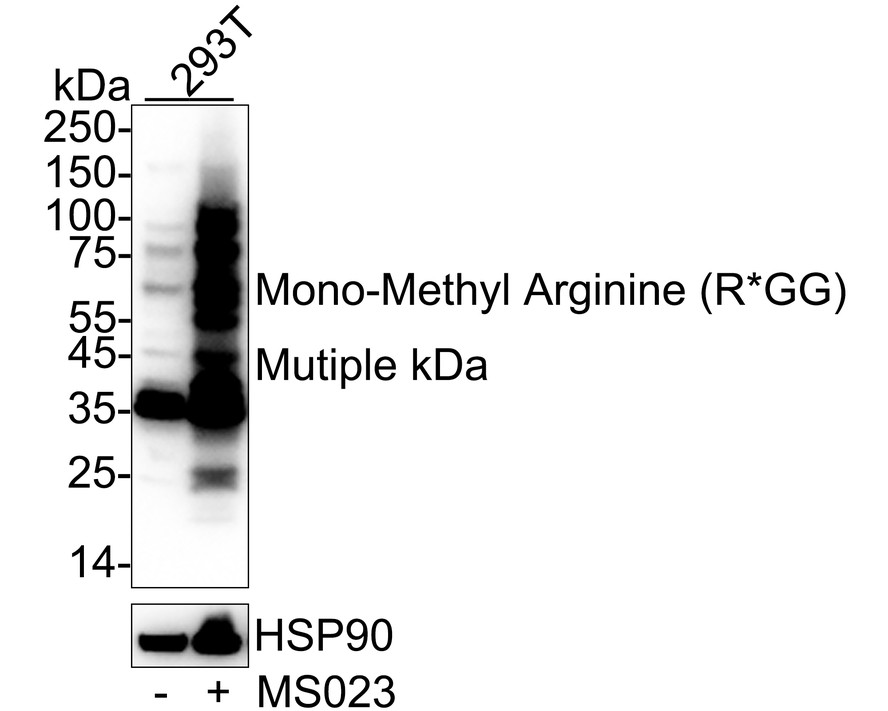
Western blot analysis of Mono-Methyl Arginine (R*GG) on different lysates with Rabbit anti-Mono-Methyl Arginine (R*GG) antibody at 1/1,000 dilution. Lane 1: 293T cell lysate, Lane 2: 293T treated with 10nM Type I PRMT inhibitor MS023 for 48 hours cell lysate, Lysates/proteins at 20 µg/Lane. Observed band size: Mutiple kDa Exposure time: 5 seconds; 4-20% SDS-PAGE gel. Proteins were transferred to a PVDF membrane and blocked with 5% NFDM/TBST for 1 hour at room temperature. The primary antibody at 1/1,000 dilution was used in 5% NFDM/TBST at 4℃ overnight. Goat Anti-Rabbit IgG - HRP Secondary Antibody at 1/50,000 dilution was used for 1 hour at room temperature.
Application Notes
WB:1:1000-1:5000
Additional Information
Form
Liquid
Storage Instructions
Store at +4℃ after thawing. Aliquot store at -20℃. Avoid repeated freeze / thaw cycles.