| 存储条件 |
|---|
| Product Name | Bad |
|---|---|
| Antibody Type | Primary Antibodies |
| Antigen Alias | AI325008 antibody BAD antibody BAD_HUMAN antibody BBC 2 antibody BBC2 antibody BBC6 antibody Bcl 2 Antagonist of Cell Death antibody Bcl 2 Binding Component 6 antibody BCL X / BCL 2 Binding Protein antibody BCL X Binding Protein antibody Bcl XL/Bcl 2 Associated Death Promoter antibody Bcl-2-binding component 6 antibody Bcl-2-like protein 8 antibody Bcl-XL/Bcl-2-associated death promoter antibody Bcl2 antagonist of cell death antibody BCL2 antagonist of cell death protein antibody BCL2 associated agonist of cell death antibody Bcl2 Associated Death Promoter antibody BCL2 binding component 6 antibody BCL2 binding protein antibody Bcl2 Like 8 Protein antibody Bcl2-L-8 antibody BCL2L8 antibody Proapoptotic BH3 Only Protein antibody |
| Product description | The Bcl-2 family of proteins is characterized by its ability to modulate cell death (apoptosis) under a broad range of physiologic conditions. Bcl-2 and several related proteins function to inhibit apoptosis while other members of the Bcl-2 family, such as Bax and Bak, enhance cell death under various conditions. For instance, Bcl-xL represses cell death, while its shorter form, Bcl-xS, promotes apoptosis. A protein designated Bad exhibits homology to Bcl-2 limited to the BH1 and BH2 domains. Bad functions to dimerize with Bcl-xL and with Bcl-2, but not with Bax, Bcl-xS, Mcl-1, A1 or itself. In mammalian cells, Bad binds with greater affinity to Bcl-xL than to Bcl-2 and reverses the death repressor activity of Bcl-xL but not Bcl-2. Dimerization of Bad with Bcl-xL results in displacement of Bax from Bcl-xL:Bax complexes thereby causing restoration of Bax-mediated apoptosis. |
| Immunogen | Synthetic peptide within human Bad N-terminal (KLH-coupled). |
| Clonality | Polyclonal |
|---|---|
| Isotype | IgG |
| Host Species | Rabbit |
| Tested Applications | WBICCIHCFC |
| ICC:1:50-1:200 IHC:1:50-1:200 | |
| Species Reactivity | Human |
| Concentration | 1mg/ml |
| Alternative Names | AI325008 antibody BAD antibody BAD_HUMAN antibody BBC 2 antibody BBC2 antibody BBC6 antibody Bcl 2 Antagonist of Cell Death antibody Bcl 2 Binding Component 6 antibody BCL X / BCL 2 Binding Protein antibody BCL X Binding Protein antibody Bcl XL/Bcl 2 Associated Death Promoter antibody Bcl-2-binding component 6 antibody Bcl-2-like protein 8 antibody Bcl-XL/Bcl-2-associated death promoter antibody Bcl2 antagonist of cell death antibody BCL2 antagonist of cell death protein antibody BCL2 associated agonist of cell death antibody Bcl2 Associated Death Promoter antibody BCL2 binding component 6 antibody BCL2 binding protein antibody Bcl2 Like 8 Protein antibody Bcl2-L-8 antibody BCL2L8 antibody Proapoptotic BH3 Only Protein antibody |
|---|---|
| Cellular Localization | Mitochondrion outer membrane, Cytoplasm |
| SwissProt ID | Q92934 |
|---|
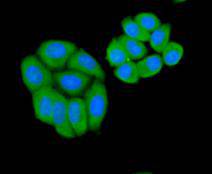
Application
Fig1: Immunocytochemical staining of HepG2 cells using anti-Bad rabbit polyclonal antibody.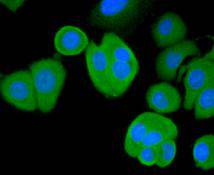
Application
Fig2: Immunocytochemical staining of SK-BR-3 cells using anti-Bad rabbit polyclonal antibody.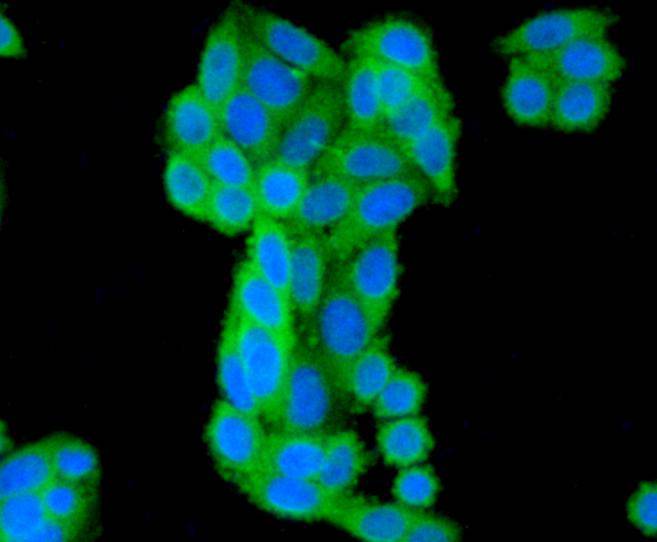
Application
Fig3: Immunocytochemical staining of SW480 cells using anti-Bad rabbit polyclonal antibody.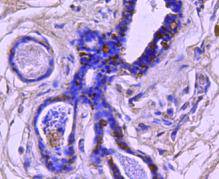
Application
Fig4: Immunohistochemical analysis of paraffin- embedded human breast carcinoma tissue using anti-Bad rabbit polyclonal antibody.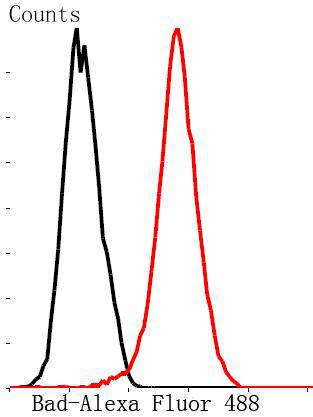
Application
Fig5: Flow cytometric analysis of MCF-7 cells with Bad antibody at 1/50 dilution (red) compared with an unlabelled control (cells without incubation with primary antibody; black). Alexa Fluor 488-conjugated Goat anti rabbit IgG was used as the secondary antibody.| Positive Control | HepG2, SK-BR-3, SW480, human breast carcinoma tissue, MCF-7 |
|---|---|
| Application Notes | ICC:1:50-1:200 IHC:1:50-1:200 |
| Form | Liquid |
|---|---|
| Storage Instructions | Store at +4℃ after thawing. Aliquot store at -20℃ or -80℃. Avoid repeated freeze / thaw cycles. |
| Storage Buffer | 1*TBS (pH7.4), 1%BSA, 40%Glycerol. Preservative: 0.05% Sodium Azide. |
抱歉,暂无相关文献