| 存储条件 |
|---|
| Product Name | FPR2 |
|---|---|
| Antibody Type | Primary Antibodies |
| Antigen Alias | ALXR antibody FMLP-R-I antibody FMLP-R-II antibody FMLP-related receptor I antibody FMLPX antibody Formyl peptide receptor 2 antibody Formyl peptide receptor related antibody Formyl peptide receptor-like 1 antibody FPR2 antibody FPR2_HUMAN antibody FPR2A antibody FPRH1 antibody FPRH2 antibody FPRL1 antibody HM63 antibody Lipoxin A4 receptor antibody LXA4 receptor antibody LXA4R antibody N-formyl peptide receptor 2 antibody RFP antibody |
| Product description | The N-formyl peptide receptor (FPR) family is comprised of three members, FPR, FPR2 (also designated lipoxin A4 receptor, FPRH1 and FPRL1) and FPR3 (also designated FPRL2), all of which are chemotactic G protein-coupled receptors that contain seven transmembrane domains. These receptors are found on the surface of phagocytic leukocytes, such as neutrophils and monocytes, and each family member contains specific residues, which are responsible for determining its ligand specificity. FPR2 is a promiscuous receptor that binds to several ligands, including lipoxin A4, N-formyl-methionyl-leucyl-phenylalanine (fMLP), serum amyloid A (SAA), prion peptide and the 42 amino acid form of ∫ amyloid. Upon activation, FPR2 induces migration and calcium mobilization in human monocytes and neutrophils and is involved in inflammatory and host defense responses. FPR2 may mediate inflammation in prion and Alzheimer’s diseases, which makes it a potential target for therapeutic agents. |
| Immunogen | peptide |
| Clonality | Polyclonal |
|---|---|
| Isotype | IgG |
| Host Species | Rabbit |
| Tested Applications | ICCIHCFC |
| ICC:1:50-1:200 IHC:1:50-1:200 FC:1:50-1:100 | |
| Species Reactivity | HumanMouseRat |
| Concentration | 1mg/ml |
| Alternative Names | ALXR antibody FMLP-R-I antibody FMLP-R-II antibody FMLP-related receptor I antibody FMLPX antibody Formyl peptide receptor 2 antibody Formyl peptide receptor related antibody Formyl peptide receptor-like 1 antibody FPR2 antibody FPR2_HUMAN antibody FPR2A antibody FPRH1 antibody FPRH2 antibody FPRL1 antibody HM63 antibody Lipoxin A4 receptor antibody LXA4 receptor antibody LXA4R antibody N-formyl peptide receptor 2 antibody RFP antibody |
|---|---|
| Molecular Weight(MW) | 39 kDa |
| Cellular Localization | Cell membrane |
| SwissProt ID | P25090 |
|---|
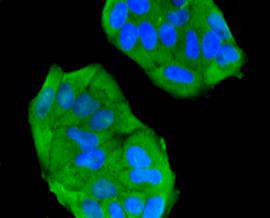
Application
Fig1: Immunocytochemical staining of Hela cells using anti-FPR2 rabbit polyclonal antibody.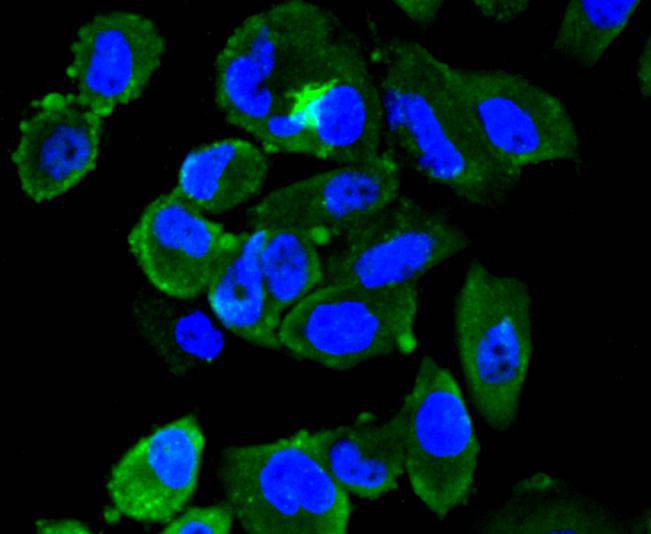
Application
Fig2: Immunocytochemical staining of PC-3M cells using anti-FPR2 rabbit polyclonal antibody.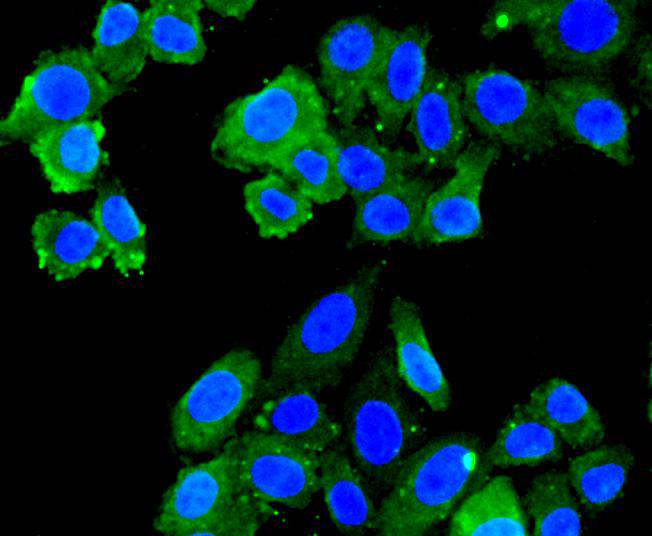
Application
Fig3: Immunocytochemical staining of HepG2 cells using anti-FPR2 rabbit polyclonal antibody.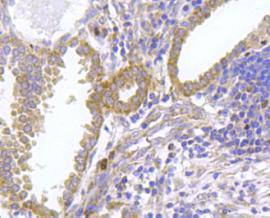
Application
Fig4: Immunohistochemical analysis of paraffin- embedded human lung cancer tissue using anti-FPR2 rabbit polyclonal antibody.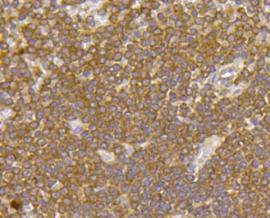
Application
Fig5: Immunohistochemical analysis of paraffin- embedded human spleen tissue using anti-FPR2 rabbit polyclonal antibody.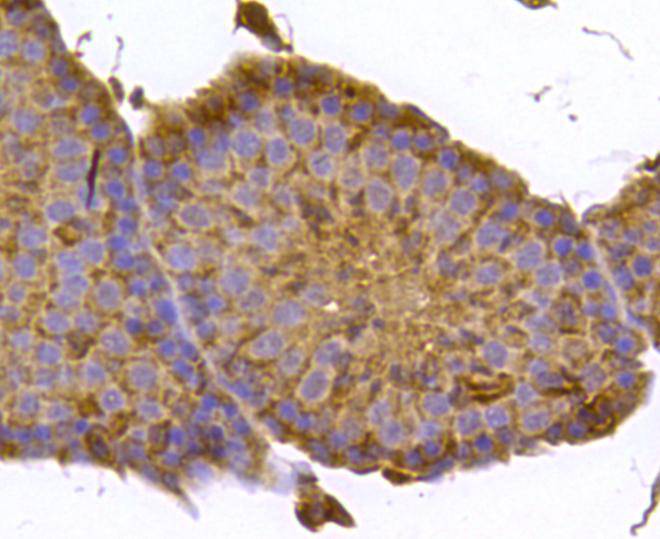
Application
Fig6: Immunohistochemical analysis of paraffin- embedded mouse testis tissue using anti-FPR2 rabbit polyclonal antibody.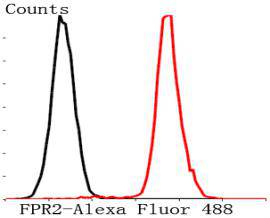
Application
Fig7: Flow cytometric analysis of Jurkat cells with FPR2 antibody at 1/50 dilution (red) compared with an unlabelled control (cells without incubation with primary antibody; black). Alexa Fluor 488-conjugated Goat anti rabbit IgG was used as the secondary antibody.| Positive Control | Hela, HepG2, PC-3M, human lung cancer, mouse testis tissue, human spleen tissue. |
|---|---|
| Application Notes | ICC:1:50-1:200 IHC:1:50-1:200 FC:1:50-1:100 |
| Form | Liquid |
|---|---|
| Storage Instructions | Store at +4℃ after thawing. Aliquot store at -20℃ or -80℃. Avoid repeated freeze / thaw cycles. |
| Storage Buffer | 1*TBS (pH7.4), 1%BSA, 40%Glycerol. Preservative: 0.05% Sodium Azide. |
抱歉,暂无相关文献